


In traditional shooting training, targets were either stationary or moved along a simple linear path (right-left). This type of training, while important, lacks the most crucial dimension of real combat: depth and unpredictable movement. The opponent, in reality, does not move in a straight line, but appears from angles, crosses open spaces, and moves toward or away from you. Hence the strategic importance of the monorail system as an advanced engineering solution for adding a third dimension and realistic movement to training.
What is a monorail system and how does it work?
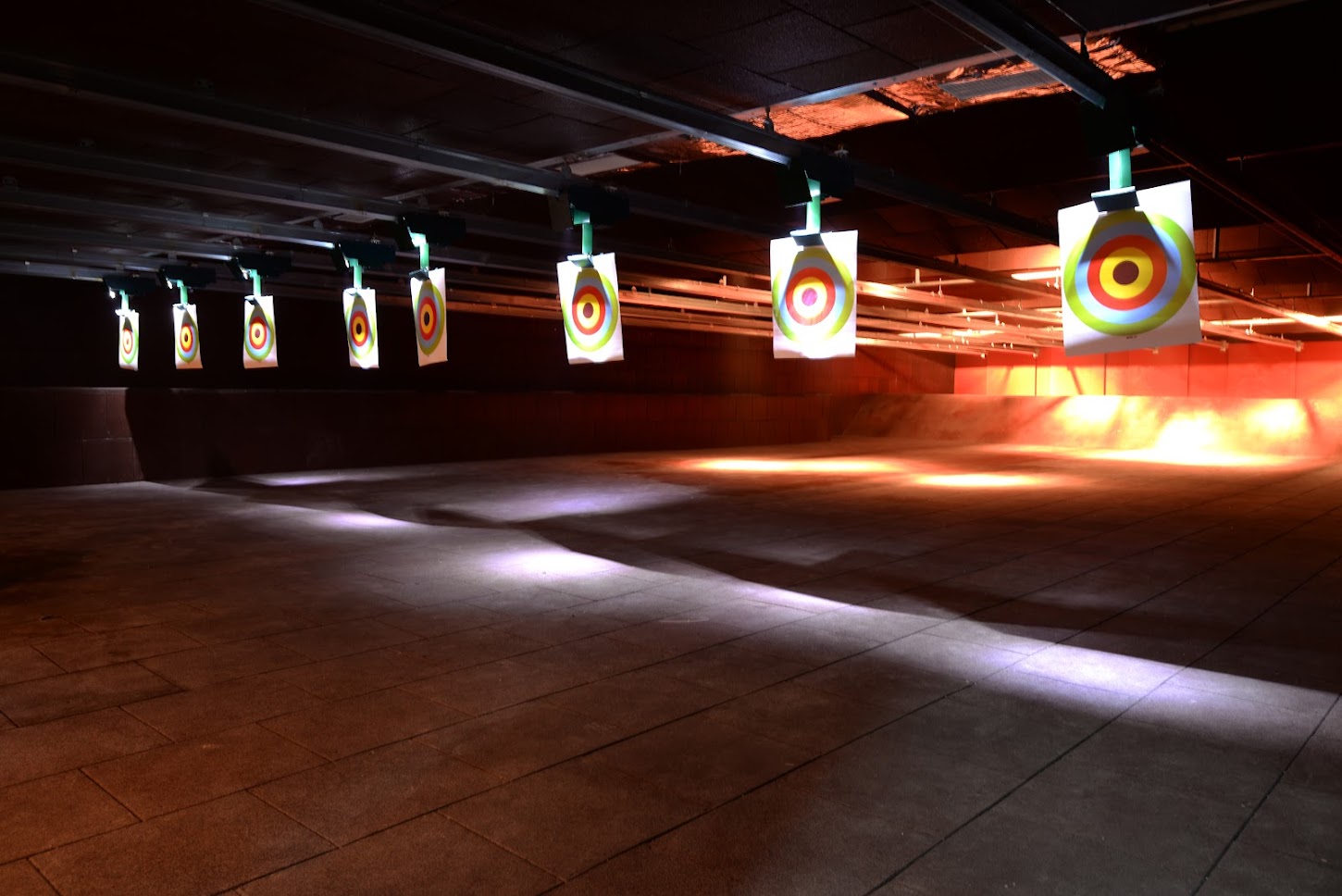
A monorail system is a target system in which the target-carrying mechanism is suspended from a motorized trolley that moves on a single metal rail (monorail) fixed to the range ceiling. This trolley is centrally controlled from the control room and can be programmed to execute complex movement paths.
Engineeringly, the system features:
- A powerful and silent motor: allows for smooth and sudden movement without producing noise that would reveal the target’s approach. * Variable Speeds: The target’s speed can be programmed to be slow, fast, or change abruptly.
- Advanced Tracks: In advanced designs, monorail tracks can be curved or intersecting, allowing for more random and complex movement.
- Interactive Target Carrier: The target carrier mechanism is often capable of rotating the target to reveal a “friend” or “enemy” face, adding a decision-making element to training.
Tactical and Military Significance: Why is the Monorail a Game-Breaker?
-
Realistic Human Movement Simulation
The monorail is the best way to simulate the movement of a real human in a built-up environment. It can make the target appear from behind a corner, cross a doorway or corridor, and then disappear behind another cover. This dynamic movement teaches the fighter vital skills such as “slicing the pie” and quickly engaging passing targets.
-
Training to Engage Moving Targets in Depth
This is the most important feature. The monorail can move the target directly toward the fighter (to simulate a direct attack) or away from them (to simulate an opponent’s retreat). This type of movement presents a completely different challenge, forcing the shooter to deal with a target whose apparent size is constantly changing, requiring different calculations for anticipation and aiming.
-
Freeing Up the Tactical Operational Space
Since the entire system is suspended from the ceiling, the field floor remains completely open and free of any obstructions. This feature is vital and of paramount importance, as it allows trainees (individually or as a team) to execute “fire and move” tactics freely and safely, advancing within the field and engaging the moving target from different angles without fear of tripping over floor bars.
-
Creating Complex Tactical Scenarios
The monorail allows for the design of scenarios impossible to execute with other systems. For example, a stationary, fast-moving target can be programmed to appear forward while a monorail target moves laterally at the same time, forcing the fighter to prioritize and deal with multiple simultaneous threats.
- Increased Durability and Reliability
From an engineering perspective, placing the movement mechanism and motors on the roof protects them from direct or ricocheting impacts, significantly reducing malfunctions and extending the system’s lifespan compared to ground-based systems, which are always vulnerable.
Applications:
The importance of the monorail is particularly evident in tactical assault houses and advanced enclosed firing ranges, where the objective is to simulate combat in confined spaces and buildings.
The monorail system is not merely a moving target; it is a training tool that transforms a static field into a dynamic theater of operations. At Maknoon, we integrate this technology as a core element in our advanced designs because we believe that training a fighter to handle realistic and unpredictable movements is what gives them the edge in survival and mission success.