

Introduction
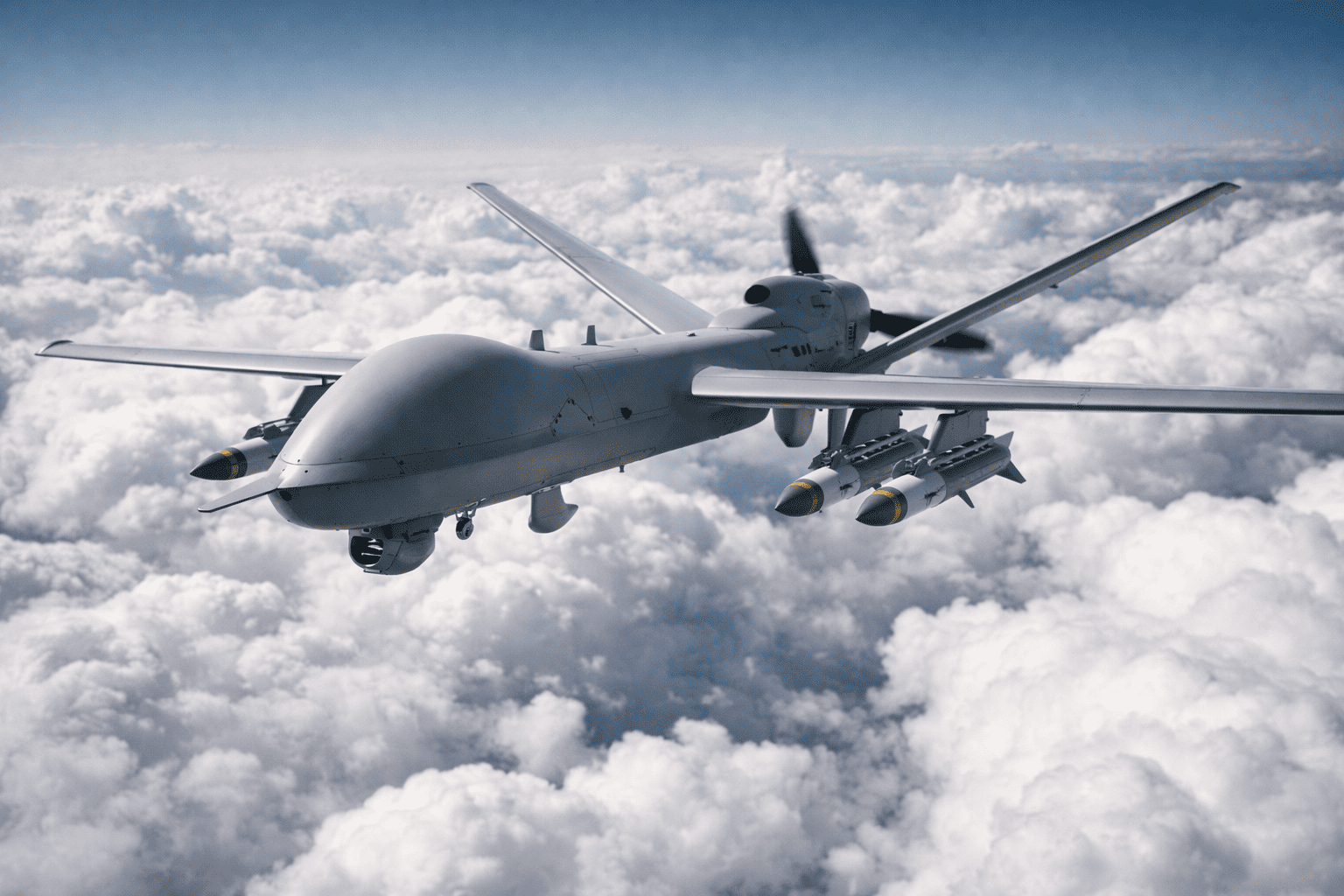
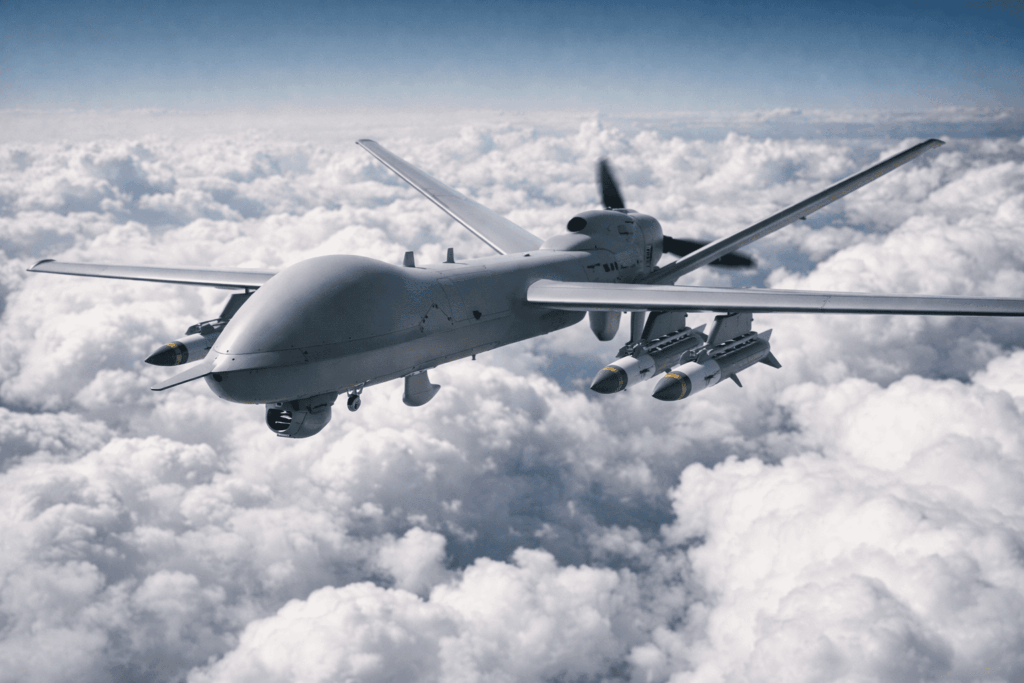
The traditional concept of aerial superiority, long defined by manned fighter jets, is no longer the sole metric of dominance in Middle Eastern skies. The emergence of ballistic missiles, cruise missiles, and Unmanned Aerial Vehicles (UAVs) has triggered a fundamental shift toward Asymmetric Warfare. This technological democratization has allowed both state and non-state actors to challenge major powers with high precision at a fraction of the cost of conventional air forces.
I. Direct and Indirect Impacts on the Power Equation
1. Direct Operational Impact:
- Erosion of Conventional Air Superiority: Even the most advanced integrated air defense systems are no longer capable of guaranteeing 100% protection against mass “saturation attacks” involving synchronized missile volleys and drone swarms.
- Surgical Precision: Missile technology has evolved from unguided “area weapons” to precision-guided munitions with a Circular Error Probable (CEP) of less than 10 meters. This enables the pinpoint targeting of energy infrastructure, military command centers, and hangars with devastating accuracy.
- Redefining Deterrence: Strategic deterrence now relies on the capability to inflict massive economic and military damage through long-range strikes without the need to mobilize ground forces or cross borders physically.
2. Indirect Strategic Impact:
- Economic Attrition Warfare: There is a significant cost asymmetry between offense and defense. The cost of a sophisticated interceptor (such as a Patriot or Tamir missile) far exceeds the cost of the attacking drone or cruise missile, creating a financial burden on the defender during prolonged conflicts.
- Empowerment of Non-State Actors: These technologies have allowed irregular forces to possess “state-like” capabilities, complicating international maritime security and regional stability.
II. Case Study: The Iran-Israel Confrontation
The direct confrontations between Iran and Israel (notably in April and October 2024) have underscored several military realities:
- The Saturation Strategy: Operations demonstrated the effectiveness of multi-layered attacks where slow-moving drones are launched first to saturate and distract radar systems, followed by cruise missiles and high-speed or hypersonic ballistic missiles to penetrate the defenses.
- Multi-Tiered Defense Effectiveness: While Israeli systems (Arrow 3, David’s Sling, and Iron Dome), supported by international allies, showed high interception rates, the “density of fire” proved that some missiles can still breach defenses to strike high-value military assets, such as the Nevatim Airbase.
- The Collapse of Distance: These encounters proved that geographical distance is no longer a protective barrier. The “response window” is now measured in seconds, necessitating AI-driven early warning and automated interception systems.
III. The Middle Eastern Arsenal: A Regional Overview
The Middle East currently hosts the highest density of missile and drone technology globally. Iran maintains the region’s largest and most diverse ballistic arsenal, featuring systems like the Khorramshahr, Kheibar, and Fattah, supported by a vast fleet of Shahed-136 and Mohajer-6 drones. In contrast, Israel maintains a significant technological edge with its Jericho missile series and world-class UAVs such as the Heron and Hermes, alongside its unparalleled multi-layered defense shield.
Turkey has emerged as a global leader in the export of combat-proven drones, notably the Bayraktar TB2 and the high-altitude Akinci, while also developing the Tayfun missile system. Meanwhile, Saudi Arabia and the United Arab Emirates have shifted their strategy toward acquiring advanced defensive systems and localizing the manufacturing of reconnaissance and tactical drones. Egypt has also made significant strides in this field, focusing on indigenous drone production, such as the Nut and June 30 UAVs, while modernizing its defensive missile infrastructure to counter emerging aerial threats.
IV. Future Strategic Importance (Vision 2030)
- Swarm Intelligence: The future lies in autonomous drone swarms that communicate with one another to overwhelm defenses collectively, making individual interceptions ineffective.
- Hypersonic Weaponry: The development of missiles traveling at speeds exceeding Mach 5 with maneuverable flight paths will render current interception technologies largely obsolete.
- AI Integration: Future UAVs will be capable of autonomous target acquisition and engagement (Loitering Munitions) even in GPS-denied or signal-jammed environments.
V. Strategic Recommendations for Maknoon Group
As a leader in defense and technology, Maknoon Shooting and Maknoon Media should prioritize the following:
- C-UAS Training Modules: Develop specialized training programs for security firms and military units focused on the detection and neutralization of small and tactical drones (Counter-UAV).
- Advanced Simulation Software: Invest in the development of “Saturation Attack Simulators” to train air defense crews on managing high-density missile and drone incursions.
- Electronic Warfare Awareness: The “Maknoon Center” should publish periodic reports on the evolution of Electronic Warfare (EW) and signal jamming as essential components of drone operations.
- Strategic Industrial Partnerships: Explore opportunities for localizing the manufacturing of drone components, such as secure communication links and sensors, through partnerships in Turkey, Germany, or Saudi Arabia.
Prepared by: Maknoon Center for Military and Political Studies
اترك تعليقاً